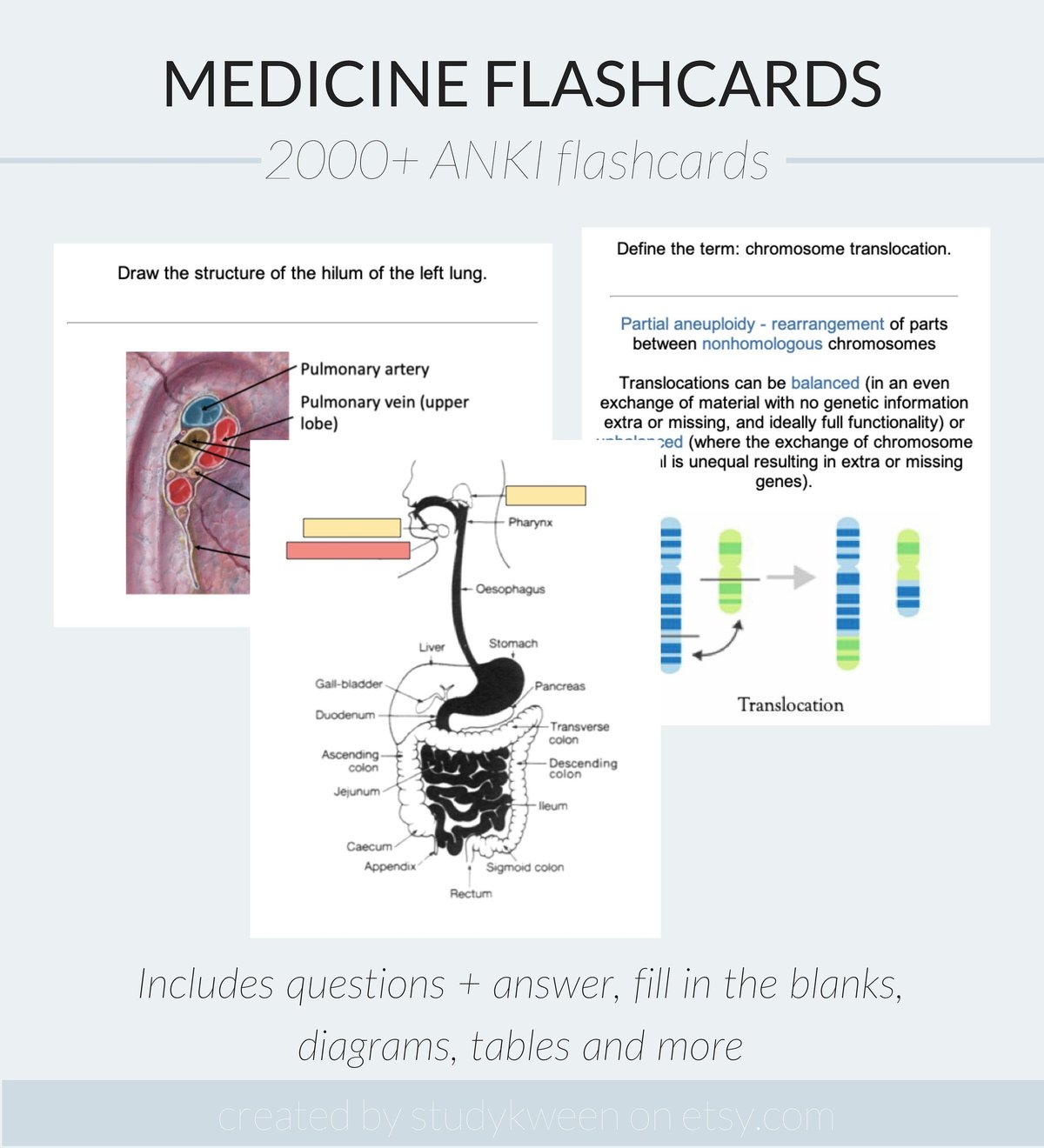
The MCAT is a beast, a sprawling academic marathon that demands meticulous preparation and relentless content review. For many, flashcards become an indispensable weapon in this fight, turning passive learning into active recall. While Anki has long reigned supreme as the gold standard for digital spaced repetition, the ecosystem around it—including services like AnkiHub—has grown more complex. If you're wondering how to leverage the power of flashcards for your MCAT prep without necessarily committing to every service, you're in the right place. We're exploring free and paid alternatives to AnkiHub for MCAT flashcards, cutting through the noise to help you build the most effective study routine for you.
This isn't just about finding another app; it's about understanding your options, optimizing your study, and ultimately, acing the MCAT.
At a Glance: Your MCAT Flashcard Game Plan
- Anki is Free & Powerful: The core Anki application (desktop and web) is completely free and features spaced repetition, a scientifically-backed method for long-term memory.
- Community-Driven Content: Thousands of high-quality, free MCAT Anki decks exist, shared by students who've been in your shoes. Reddit is your friend here.
- Diverse Deck Options: Whether you're a visual learner, a Kaplan user, or focused on a specific section like P/S, there's likely a pre-made Anki deck tailored to your needs.
- Paid Alternatives Exist: Beyond Anki, various comprehensive MCAT prep platforms offer integrated flashcard features, often alongside practice questions and video lessons, for a fee.
- Customization is Key: Regardless of the platform, the "best" flashcard strategy involves tailoring settings, combining resources, and actively engaging with the material.
- Flashcards are Supplemental: Always remember flashcards reinforce core content; they aren't a substitute for initial learning through textbooks, lectures, or review courses.
The Foundation: Why Spaced Repetition is Your Memory's Best Friend
Before diving into alternatives, let's briefly revisit why digital flashcards, especially those leveraging spaced repetition, are so effective for MCAT prep. Traditional flashcards are great for rote memorization, but our brains are notoriously inefficient at retaining information over time without strategic reinforcement. Enter spaced repetition.
This technique isn't just a fancy buzzword; it's a learning algorithm that schedules your reviews at optimal intervals. When you recall a fact easily, the system pushes its next review further into the future. If you struggle, it brings the card back sooner. This intelligent scheduling forces your brain to actively retrieve information just as you're about to forget it, cementing it into your long-term memory. For the sheer volume of content on the MCAT, this isn't just helpful—it's transformative.
Anki is the most prominent platform built around this principle, offering a flexible, user-driven ecosystem that can be entirely free to use.
Anki: The Free Powerhouse Powering Your MCAT Recall
The core Anki application, available for desktop (Windows, macOS, Linux) and as a web-based client, is absolutely free. This means you can download the software, create an account, and start making or importing flashcards without spending a dime. Its open-source nature has fostered a massive, generous community of students who create and share meticulously crafted decks.
Getting Started with Anki:
Using Anki is straightforward once you get the hang of it:
- Download and Install: Grab the Anki desktop application from its official website.
- Create an Account: Set up an AnkiWeb account to sync your progress across devices (and potentially use the mobile app, which is a paid one-time purchase for iOS, but free for Android).
- Create or Import Decks: You can start your own deck from scratch by clicking "Create Deck," then "Add" to make cards. More commonly for MCAT, you'll download pre-made decks (we'll get to those giants in a moment!) and import them.
- Organize with Subdecks: Keep your studies tidy. Create main decks (e.g., "MCAT Prep") and then subdecks for individual subjects or content areas (e.g., "Biology," "Chemistry," "Psych/Soc").
- Customize Your Card Types: Anki offers "Basic" cards (Front/Back) and "Cloze Deletion" cards (fill-in-the-blank), among others. Most pre-made decks use these effectively.
- Optimize Your Study Settings: A critical step is adjusting the "New Cards/Day" default. Anki often sets this to a low number like 20. For comprehensive MCAT review, you'll want to increase this significantly, perhaps to 999, to ensure you're seeing a sufficient volume of new and review cards daily. Experiment to find a sustainable pace.
Free Anki Decks: The True Alternatives to Paid Content Curation
While AnkiHub offers a convenient, curated, and often collaborative way to access and manage MCAT decks, the "free alternatives" often mean simply downloading these community-shared decks directly from platforms like Reddit's r/MCAT. This bypasses any subscription fees related to syncing or content updates via AnkiHub, giving you full control over your deck library on the free Anki application.
The "best" deck is highly personal, depending on your learning style, existing prep materials, and content gaps. Many students strategically combine elements from several decks. Here's a rundown of the most popular and impactful free MCAT Anki decks, acting as powerful alternatives to any paid flashcard content:
1. Bouras: The Goliath of Comprehensive Review
- Size: The undisputed heavyweight, boasting a staggering 13,333 cards.
- Content: A monumental compilation, integrating materials from various creators and, notably, a significant portion of Khan Academy's MCAT content. This makes it incredibly thorough.
- Best For: Students who want an exhaustive, all-encompassing review and are comfortable with a high volume of cards. It's a fantastic standalone option if you're not deeply tied to a specific prep book series.
- Why it's an Alternative: Its sheer breadth means you likely won't need many other supplemental resources for core content, making it a robust free option for detailed recall.
2. JackSparrow (JS): The Comprehensive All-Rounder
- Content: Renowned for its elaborately made cards, JackSparrow is highly comprehensive and notably includes AAMC spoilers (information directly from AAMC practice materials, which can be invaluable).
- Creator's Note: The creator reportedly scored a 527, adding significant credibility to the deck's quality and effectiveness.
- Best For: Students seeking a deeply integrated and well-explained deck, particularly those who want exposure to AAMC-style content early on. It's a strong choice for those who appreciate detailed "extra" sections on cards.
- Why it's an Alternative: Its self-contained comprehensive nature and AAMC integration mean you're getting top-tier, relevant content without a subscription.
3. MCAT for Victory: The Visual Strategist
- Content: A popular comprehensive review deck that incorporates color-coding to aid information retention, drawing from a wide array of review books.
- Best For: Visual learners and those who benefit from structured, color-coded information to differentiate concepts and improve recall. It’s excellent for consolidating information from multiple sources.
- Why it's an Alternative: Its unique visual approach offers a distinct learning advantage that many paid platforms might not replicate as effectively, making it a strong free choice for specific learning styles.
4. MileDown: The Visual Learner's Best Friend
- Key Feature: Widely appreciated for its copious illustrations and graphics, making complex topics more digestible and memorable.
- Requirement: Requires the "Hierarchical tags 2" plugin for optimal organization and navigation.
- Best For: Highly visual learners who struggle with text-heavy cards. It's often used in conjunction with other resources like the MileDown review sheets.
- Why it's an Alternative: The focus on high-quality visual aids provides a different pathway to understanding that can be superior to purely text-based decks, all for free.
5. Ortho528: The Solid Starter Deck with Visuals
- Size: A manageable 4,351 cards, making it a solid starting point without being overwhelming.
- Content: Integrates reputable prep sources and includes visual aids, providing a balanced approach.
- Creator's Note: The creator reportedly scored a perfect 132 in a section, indicating strong subject matter expertise.
- Requirement: Utilizes the "Image Occlusion" plugin, which allows you to "hide" parts of an image to test recall (e.g., labeling anatomical diagrams).
- Best For: Students looking for a well-rounded, medium-sized deck to begin their Anki journey, especially if they benefit from interactive visual testing.
- Why it's an Alternative: It offers a strong foundational review with visual components, providing a structured, free entry point into MCAT Anki.
6. NextLevelColor: UWorld's Anki Companion
- Size: A voluminous deck with approximately 5,900 cards.
- Content: Heavily incorporates UWorld prep materials, a highly respected source for MCAT practice questions, and includes specific amino acid reviews.
- Creator's Note: The uploader reportedly scored a 519 and even provides a study scheduling guide, offering insights into effective usage.
- Requirement: Requires several plugins to function optimally.
- Best For: Students actively using UWorld for practice questions who want their Anki review to directly reinforce UWorld concepts.
- Why it's an Alternative: Its direct alignment with UWorld, a premium resource, makes it an excellent free complement, extending the value of your UWorld subscription without adding extra flashcard costs.
7. RebopBebop: Kaplan Companion for Biochem Buffs
- Creation Date: Developed in 2016, it remains relevant due to its structured approach.
- Content: Cards are meticulously arranged by chapter, making it ideal for those following Kaplan prep materials. It's particularly noted for its biochemistry questions.
- Best For: Students using Kaplan review books who want their flashcards to mirror the content and progression of their primary study source. Excellent for focused biochemistry review.
- Why it's an Alternative: Its direct integration with Kaplan's chapter structure provides a seamless, free review experience for Kaplan users, saving them from creating their own chapter-specific cards.
8. Cubene: The P/S Powerhouse
- Focus: Uniquely specializes in the P/S (Psychological, Social, and Biological Foundations of Behavior) section of the MCAT.
- Recommendation: Best used as supplemental review specifically for this high-yield section.
- Best For: Students who need to shore up their P/S knowledge or who want a dedicated, in-depth flashcard resource for this particular section.
- Why it's an Alternative: Its specialized focus allows for a deeper dive into P/S than many general decks, offering a free, targeted solution for a challenging section.
9. Vixxyn: The High-Scorer's Comprehensive Deck
- Origin: An adaptation of sc4s2cg's deck, demonstrating community evolution.
- Creator's Note: The creator reports an impressive score of 528.
- Content: Highly comprehensive, with most new cards logically grouped in a "ZExpansion" category for structured learning.
- Best For: Students seeking a very high-quality, comprehensive deck from a top scorer, especially if they appreciate well-organized new material.
- Why it's an Alternative: Like JackSparrow, its highly comprehensive nature and pedigree from a top scorer make it a strong, free choice for students aiming for peak performance.
10. Mitochondrialdna24: Blended & Organized
- Release Date: Released in 2020, making it a more recent compilation.
- Content: Combines elements from Kaplan prep books and RebopBebop's deck, featuring organization by topic and source material.
- Best For: Students who want a curated blend of popular resources, especially if they appreciate clear topical and source-based organization.
- Why it's an Alternative: It offers a "best of both worlds" approach by integrating two popular sources into a single, well-organized, free deck.
11. Nyc_penguin: Simplicity and Specificity
- Structure: A series of individual, subject-specific decks rather than one monolithic compilation.
- Key Feature: Emphasizes simplicity, requiring no add-ons, and also includes a helpful formula list.
- Best For: Students who prefer to tackle subjects one at a time, appreciate a minimalist Anki experience, or need a quick reference for formulas.
- Why it's an Alternative: Its modular, add-on-free design makes it accessible and easy to integrate into any study plan, especially for those who find many Anki setups overly complex.
12. Tiramiwho's Physics Equations: Physics Formula Focus
- Size: The smallest deck, with only 103 cards.
- Focus: Solely dedicated to physics equations, specifically drawn from Kaplan materials.
- Best For: Students who feel confident in other areas but need to drill down specifically on physics formulas, or those using Kaplan for physics.
- Why it's an Alternative: This hyper-specific, free deck offers a targeted solution for a common pain point without requiring you to sift through thousands of other cards.
Beyond Anki: Exploring Paid MCAT Flashcard Alternatives
While Anki offers unparalleled flexibility and a wealth of free content, it's not the only game in town. Several paid MCAT preparation platforms integrate flashcards as part of a broader study ecosystem. These often come with higher price tags but offer convenience, integrated learning, and sometimes proprietary content.
Here's a look at common paid alternatives that offer flashcard features:
1. Integrated MCAT Prep Programs (Kaplan, Princeton Review, Blueprint MCAT, Gold Standard)
- What they offer: These comprehensive programs typically include video lectures, textbooks, practice questions, full-length exams, and often their own proprietary flashcard systems or integrated digital flashcards.
- Pros:
- Seamless Integration: Flashcards are designed to complement their course content directly.
- Explanations: Cards often link directly to explanations, videos, or textbook sections within the platform.
- Official Content: Some platforms might incorporate AAMC-style questions or concepts into their flashcards.
- User Experience: Often more polished and less DIY than Anki, with dedicated support.
- Cons:
- High Cost: These are significant investments, often thousands of dollars.
- Less Customization: You're usually limited to their card formats and content, with less flexibility than Anki.
- Vendor Lock-in: You're tied to one ecosystem.
- Best For: Students seeking an all-in-one solution who prefer a structured, guided approach and are willing to pay a premium for convenience and integrated resources.
2. UWorld MCAT Question Bank with Flashcard Feature
- What it offers: UWorld is primarily known for its incredibly high-quality practice questions and detailed explanations. It also includes a "Notebook" feature where you can create flashcards directly from questions or explanations.
- Pros:
- Contextual Learning: Create flashcards based on concepts you struggled with in practice questions.
- Excellent Explanations: UWorld's explanations are legendary, and your flashcards can link back to them.
- Proprietary Questions: Access to questions mirroring the AAMC style and difficulty.
- Cons:
- Focus on Q-Bank: Flashcards are a secondary feature, not the core product.
- Cost: UWorld itself is a paid subscription.
- Manual Creation: You have to create most of your own cards, which is time-consuming.
- Best For: Students prioritizing practice questions and wanting to turn their review of those questions into active recall flashcards. It's an excellent supplementary tool.
3. Specialty Flashcard Apps (e.g., Quizlet Plus for custom features)
- What they offer: While Quizlet has a free tier, Quizlet Plus offers features like enhanced spaced repetition, image uploading, and offline access. Other smaller apps exist as well.
- Pros:
- Simplicity: Often very user-friendly interfaces.
- Accessibility: Many are mobile-first.
- Community Content (variable): You might find some community-shared MCAT decks.
- Cons:
- Spaced Repetition Limitations: While some offer it, it's generally not as sophisticated or customizable as Anki's algorithm.
- Content Quality: Highly variable; less curated than dedicated MCAT prep platforms or trusted Anki decks.
- Cost (for premium features): Monthly or annual subscription fees.
- Best For: Students who might already be familiar with a specific flashcard app for other courses and prefer its interface, or those who need something extremely simple for basic recall. However, for MCAT's depth, Anki often provides a more robust solution.
Choosing Your MCAT Flashcard Path: Key Decision Factors
With a dizzying array of options, how do you pick the right flashcard strategy? Consider these factors:
- Your Budget:
- Free (Anki + community decks): Ideal for budget-conscious students who are self-disciplined and comfortable with a bit of DIY setup.
- Paid (Prep programs, UWorld, AnkiHub): Suitable for those who prioritize convenience, integrated learning, proprietary content, or dedicated support and are willing to invest financially. If you're weighing whether AnkiHub membership for MCAT is right for your budget and workflow, consider the value of centralized deck management against the free alternatives.
- Your Learning Style:
- Visual Learners: MileDown, MCAT for Victory, or Ortho528 (with Image Occlusion) are excellent free Anki choices.
- Text-Heavy/Detailed Learners: JackSparrow or Bouras might be more your speed.
- Integrated Learners: Paid platforms often link flashcards to videos and texts.
- Your Current Study Materials:
- Kaplan Users: RebopBebop or Mitochondrialdna24 are natural fits for free Anki integration.
- UWorld Users: NextLevelColor directly complements your UWorld practice.
- Using Multiple Sources: Comprehensive Anki decks like Bouras or JackSparrow, or self-made cards, can help consolidate.
- Your Time Commitment:
- Limited Time: A smaller, focused deck like Cubene (P/S) or Tiramiwho's (Physics) might be best. Or a comprehensive deck where you selectively "suspend" irrelevant cards.
- Plenty of Time: Larger decks like Bouras or JackSparrow offer extensive review, but require consistent daily engagement.
- Need for Explanations vs. Pure Recall:
- Pure Recall: Most Anki cards focus on front/back recall.
- Detailed Explanations: Paid platforms often excel here, linking to deeper content. Some Anki decks (like JackSparrow) also incorporate detailed "extra" sections.
- Desire for Community Collaboration vs. Standalone Study:
- Community: Anki's strength lies in its shared decks and forums like Reddit. AnkiHub also facilitates community updates.
- Standalone: If you prefer to work in isolation or make all your own cards, any platform works, but Anki provides the most flexible framework.
Maximizing Your Flashcard Study: Best Practices for MCAT Success
No matter which alternative you choose, the effectiveness of your flashcards hinges on how you use them.
- Integrate with Content Review, Don't Replace It: Flashcards are a powerful supplemental tool. Use them to reinforce information you've already learned from textbooks, lectures, or review courses. If you're encountering a concept for the first time on a flashcard, you're doing it wrong.
- Be Consistent (Spaced Repetition Principles are Key): The magic of spaced repetition only works if you show up daily. Even 30-60 minutes a day is more effective than marathon sessions once a week. Anki's algorithms are built on this consistency.
- Focus on Active Recall: Don't just flip the card and nod. Force yourself to articulate the answer before revealing the back. This mental strain is what strengthens memory.
- Make Your Own Cards (Selectively): While pre-made decks are amazing time-savers, the act of creating your own flashcards for particularly tricky concepts or for mistakes you made on practice questions is a powerful learning tool in itself. This active creation solidifies understanding.
- Customize Anki Settings for MCAT Pace: As mentioned, adjust "New Cards/Day" and "Review Cards/Day" to ensure you're seeing enough material. Don't be afraid to experiment with other interval settings once you understand Anki better.
- Don't Over-Rely on Flashcards: Flashcards are fantastic for recall, but the MCAT also tests application and critical thinking. Balance flashcard review with practice problems, full-length exams, and in-depth content review.
- Filter and Suspend Liberally: If a pre-made deck has cards on content you already know cold, or material irrelevant to your specific prep, don't hesitate to "suspend" those cards in Anki. Your time is precious.
- Use Add-ons Wisely: Many Anki decks recommend specific add-ons (like "Hierarchical Tags 2" or "Image Occlusion"). These can significantly enhance functionality, but don't overload your Anki with too many that you don't understand.
Common Questions About MCAT Flashcards
Are flashcards enough for MCAT prep?
Absolutely not. Flashcards are excellent for memorization and active recall of discrete facts, formulas, and concepts. However, the MCAT is a reasoning exam that requires applying knowledge to complex scenarios, interpreting data, and critical thinking. You must combine flashcards with comprehensive content review (textbooks, videos), extensive practice questions (UWorld, AAMC materials), and full-length practice exams.
Should I make my own flashcards or use pre-made decks?
For the MCAT, a hybrid approach is often best. Pre-made decks (like the ones discussed above) save an immense amount of time and are often meticulously curated by high scorers. They're fantastic for covering the bulk of content. However, making your own cards for concepts you personally struggle with, for mistakes from practice questions, or for niche areas helps solidify your specific weaknesses.
How many flashcards should I do per day for the MCAT?
This varies greatly depending on your study phase and total prep time. Early on, you might aim for 50-100 new cards per day plus your reviews. As you get closer to the exam, your daily review count might climb to hundreds (or even over a thousand) as older cards resurface. The key is consistency. Anki's algorithm will tell you how many cards are "due" for review each day, and it's best to complete those. Adjust your "New Cards/Day" setting in Anki to control the influx of new material.
What's the difference between Anki and AnkiHub?
Anki is the free, open-source application for spaced repetition flashcards. You download it, create cards, and manage your decks. AnkiHub, on the other hand, is a subscription service that works with Anki. It provides a platform for community-curated decks (often the same ones you could download for free manually), allowing for synchronized updates, collaboration, and centralized management of these decks. While Anki itself is free, AnkiHub charges a fee for its service. The alternatives we've discussed allow you to use Anki's powerful features without the AnkiHub subscription.
Your Next Step to MCAT Flashcard Mastery
The world of MCAT flashcards is rich with options, whether you opt for the powerful, free flexibility of Anki with its community-driven decks or a more integrated, paid solution. The most effective path isn't a one-size-fits-all solution; it's the one that aligns with your learning style, budget, and overall study plan.
Start by assessing your current study phase and resources. If you're just beginning content review, consider a comprehensive Anki deck like MileDown or Bouras to run in parallel. If you're deep into practice questions, a UWorld-aligned deck or making your own cards from mistakes might be ideal. Remember that flashcards are a tool to cultivate active recall and consolidate knowledge. Master the tool, integrate it wisely into your broader strategy, and you'll be well on your way to conquering the MCAT.